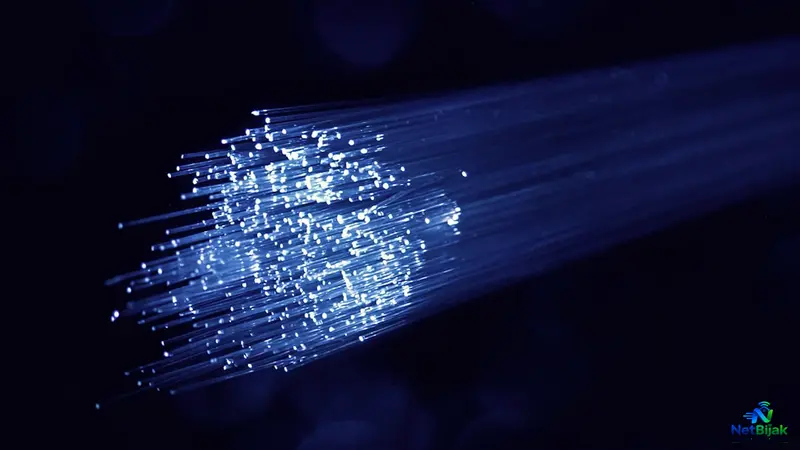
Why EG Industries’ 800G Growth Matters for Malaysia’s Internet Infrastructure
EG Industries reported a record-breaking FY2026 performance with RM1.43 billion in revenue, driven primarily by strong demand for 800G optical modules and high-performance network switches. To support this growth, the company is expanding its Batu Kawan facility to scale up production for both 800G and future 1.6T technologies. This progress aligns with Malaysia's broader digital transformation, as the nation attracts massive investments in data centres and cloud infrastructure, particularly in Johor and Selangor. While these developments bolster the backbone of the country's internet, it is important to note that 800G technology is designed for data centres rather than consumer broadband. Consequently, this infrastructure boost does not directly increase home internet speeds, which remain dependent on your specific ISP and local network conditions. NetBijak readers should continue to focus on selecting home fibre plans based on actual availability and performance at their specific addresses.
EG Industries Reports Record FY2026 Performance
EG Industries recorded RM1.43 billion in revenue for FY2026, up 31.3% year-on-year. Core profit increased 24.4% to RM102.4 million. (BusinessToday)
The company’s FY2026 growth was supported by stronger contributions from:
- 800G optical modules
- Wireless broadband-related products
- Network switches (BusinessToday)
EG Industries has a US$241.6 million purchase order covering 800G optical modules and wireless broadband products, with the order to be fulfilled in stages. (BusinessToday)
The company has also entered into a Letter of Intent worth approximately US$100 million for high-performance open networking switches using co-packaged optics technology. (BusinessToday)
EG Industries is expanding its Batu Kawan facility to increase production capacity for 800G and next-generation 1.6T optical modules. (BusinessToday)
What Is 800G?
800G is essentially a high-capacity fibre “pipe” used inside data centres and high-speed networks to move huge volumes of data between servers and networking equipment. It is not an 800Gbps home broadband package.
The move from 800G towards 1.6T reflects the industry’s push for higher network capacity as data traffic and computing requirements continue to grow. EG Industries is already expanding its capacity for both technologies. (BusinessToday)
What Does This Mean for Malaysia?
The significance goes beyond one company’s financial results.
Malaysia is attracting substantial investment in AI, cloud computing and data-centre infrastructure. MIDA said data-centre and cloud-computing projects accounted for RM95.8 billion, or about 44% of Malaysia’s approved investments in the first half of 2026, as demand for AI computing power continued to grow. (MIDA)
Johor and Selangor are among Malaysia’s major digital-infrastructure hubs. MIDA reported RM59.4 billion in approved investments in Johor and RM70.0 billion in Selangor for the first half of 2026, while highlighting the states’ growing roles in digital and data-centre investment. (MIDA)
For example, MIDA reported that a 500MW YTL Green Data Center Park in Johor is being developed, with its first phase involving a RM1.5 billion investment and up to 72MW of capacity. (MIDA)
As data-centre capacity expands, demand for optical modules, network switches and related connectivity infrastructure can also increase throughout the technology supply chain. MIDA has specifically identified AI-driven digital infrastructure and stronger local technology supply chains as part of Malaysia’s digital development. (MIDA)
For Malaysia, the longer-term significance is the development of a stronger digital infrastructure ecosystem and greater capacity across the networks connecting data centres, businesses and consumers.
However, this does not mean your home broadband speed will automatically increase.
Your actual internet performance still depends on your ISP, last-mile infrastructure, network congestion, router and Wi-Fi connection.
NetBijak Tips
800G is infrastructure, not your broadband plan. When choosing home fibre, focus on actual availability, suitable speed and network performance at your address rather than headline numbers used in data-centre technology.
Frequently Asked Questions
800G refers to optical networking technology capable of handling up to 800 gigabits per second at the relevant interface. It is primarily used in high-capacity networking environments such as data centres. EG Industries has secured orders for 800G optical modules as part of its growing networking business.
A 1.6T optical module is the next generation of higher-capacity optical technology. It offers twice the capacity of 800G and is designed to support growing AI computing demands and future data traffic. EG Industries is expanding its Batu Kawan facility for both 800G and next-generation 1.6T optical modules.
EG Industries reported stronger contributions from 800G optical modules, wireless broadband products and network switches as the company shifts towards higher-value technology products.
EG Industries secured a US$241.6 million purchase order for 800G optical modules and wireless access-related products. The order is being fulfilled in tranches and contributes to the company’s FY2026 and FY2027 revenue pipeline.
Not directly. Higher-capacity optical and networking equipment supports the wider digital infrastructure, but your home broadband experience still depends on factors such as your ISP, last-mile connection, network conditions, router and Wi-Fi equipment.
Related Articles
 Article
Maxis has upgraded its nationwide optical transport network using Nokia’s 1830 PSS and PSE-6 optical...
 News
NewsMelaka Plans to Phase Out Microwave Telecommunications LinksMelaka is moving towards a more fibre-ba...
 News
NewsMalaysia's mobile network could be getting a new type of coverage layer — one that comes from space ...
 News
NewsSource: Unifi / TM official announcementThis article covers TM’s ongoing copper broadband phase-out ...
 News
NewsMore mobile towers can improve coverage, but they do not guarantee that the network will stay online...
 News
NewsMore than 5,000 people gathering inside one venue can expose a networking problem that a normal home...