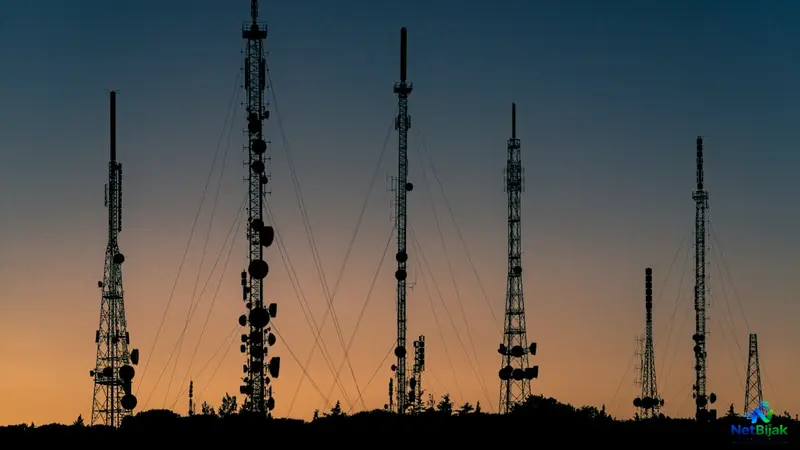
Why More Mobile Towers Do Not Always Mean Better Connectivity: The Puncak Borneo Case
More mobile towers do not automatically equate to better or more reliable connectivity. In Puncak Borneo, despite the addition of 35 new JENDELA towers, vandalism has repeatedly caused service disruptions for local residents. This happens because towers are part of an interconnected network that relies on backhaul connections to link with the operator's core. When a critical shared facility or backhaul line is damaged, multiple towers can go offline simultaneously. Therefore, tower count alone is an insufficient metric for measuring network quality, as it does not account for overall infrastructure resilience. Consumers should focus on the stability and physical security of their local network rather than just the number of visible towers nearby.
More mobile towers can improve coverage, but they do not guarantee that the network will stay online when critical infrastructure fails.
Puncak Borneo is a recent example. According to Sarawak Tribune, all 35 new JENDELA towers in the area were already operational, yet vandalism continued to disrupt connectivity. Puncak Borneo MP Datuk Willie Mongin said damage to one facility could affect several towers because the telecommunications infrastructure is interconnected. A recent disruption affecting Kampung Gerung was also traced to vandalism following checks with MCMC.
The reason is simple: a mobile tower is only one part of the connection.
One Damaged Facility Can Affect Multiple Towers
Your phone connects to a cell site over the air. That site still needs a backhaul connection to carry traffic into the operator's wider network.
GSMA defines mobile backhaul as the transport network connecting the Radio Access Network to the mobile core. Fibre and terrestrial wireless links such as microwave are commonly used for this purpose. GSMA explains the role of mobile backhaul here.
So the connection is roughly:
Phone → Cell Site → Backhaul → Operator Network → Internet
This matters in Puncak Borneo because, as Mongin pointed out, the local telecommunications infrastructure is interconnected. If a critical facility or shared upstream connection is damaged, multiple sites can potentially lose their path into the wider network even though their radio equipment is still operating. That is the network principle behind the reported outage; the public report does not identify the exact component that was damaged.
In other words, the tower can still be standing while the network connection behind it is unavailable.
Puncak Borneo Already Has 140 Telecommunications Structures
This is why the incident cannot simply be explained as a lack of towers.
The figures reported by Sarawak Tribune show 140 telecommunications structures in Puncak Borneo, including 35 new JENDELA towers, 36 MCMC Universal Service Provision towers, 41 commercial towers, seven 5G towers and 21 Sarawak Multimedia Authority rural telecommunications towers. The same report said all 172 identified 4G base-station upgrades had been completed.
Yet connectivity can still be disrupted by physical damage.
That is the difference between network expansion and network resilience.
Adding more sites can extend radio coverage. It does not automatically create independent backhaul routes, duplicate every shared network element or protect infrastructure from vandalism.
Coverage and Resilience Are Different
A coverage map tells you whether a mobile signal can reach an area.
It does not tell you how the network behaves when an upstream connection or shared facility fails.
That distinction is particularly important in rural areas, where transport infrastructure can be harder to deploy and maintain. GSMA identifies the base station, backhaul and energy supply as three major infrastructure components required to deliver mobile broadband, while rural deployments may rely on fibre or wireless backhaul depending on local conditions. GSMA's mobile-network infrastructure overview explains how these layers work together.
So when a network problem occurs, adding another tower is not always the answer. The actual bottleneck may be somewhere behind it.
What Consumers Should Take From This
When evaluating mobile broadband, do not use tower count as the only measure of network quality.
A new tower may improve the signal at your location, but your connection still depends on everything between that tower and the operator's core network.
Puncak Borneo shows why this distinction matters: the area has received substantial JENDELA infrastructure, yet vandalism can still cause wider connectivity problems when interconnected facilities are damaged.
For rural users, the more useful question is not simply:
“How many towers are nearby?”
It is:
“How is the area connected, and how resilient is that connection when something fails?”
NetBijak’s Take
When choosing a mobile network, don't stop at “how many towers were added?”
Especially in rural areas, the stability of the network behind those towers matters just as much. Backhaul, physical infrastructure and the ability to keep service running when a critical link fails can matter more than the tower count itself.
Frequently Asked Questions
Your phone may still be connected to the cell site, while the backhaul or another upstream network component is unavailable. GSMA describes backhaul as the link carrying traffic from mobile base stations into the operator's wider network.
Yes. Sarawak Tribune reported that a disruption affecting Kampung Gerung was traced to vandalism after checks with MCMC. Willie Mongin also said damage to one interconnected facility could affect several towers.
No. More towers can improve radio coverage, but network reliability also depends on backhaul, power and the wider transport infrastructure connecting those sites.
Related Articles
 Article
Moving a fibre line is not the same as moving a router.The real issue is where the fibre terminates,...
 Article
For condo residents in Kuala Lumpur and Selangor, TIME is often one of the first fibre providers to ...
 Article
If you are waiting for a Fibre installation or trying to explain your connection to a technician, kn...
 Article
If your 5G router only gets one bar indoors, do not buy an outdoor antenna first.The important quest...
 News
NewsMalaysia’s internet and communications coverage in populated areas reached 99.75% as of July 31, 202...
 Article
If your Fibre installer wants to run a cable across your neighbour’s roof, tree or private property,...