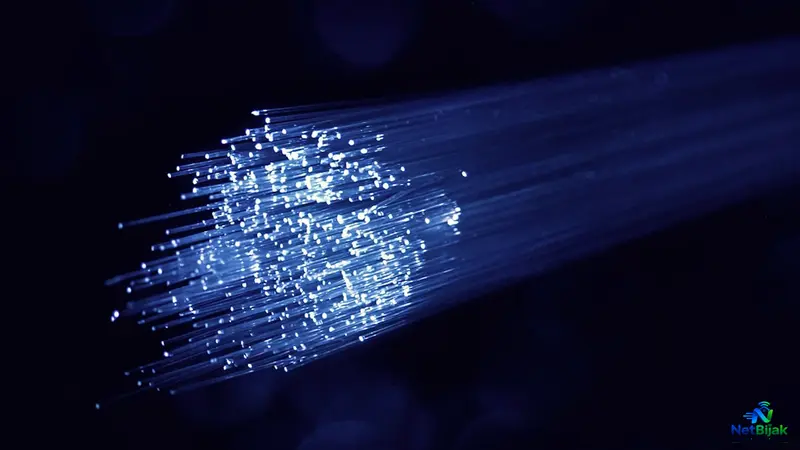
Melaka's No Microwave Policy: Why Telcos Are Replacing Microwave Backhaul with Fibre
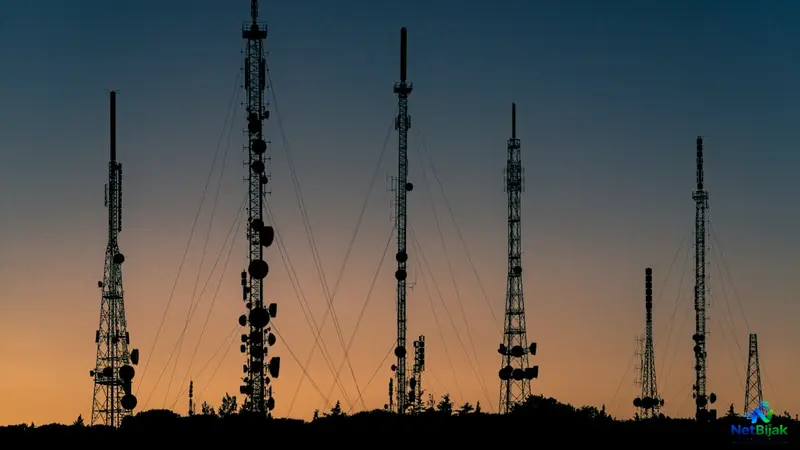
Melaka has announced a new policy to transition telecommunications towers from microwave backhaul to high-capacity fibre-optic connections within the next five years. This initiative, highlighted by a RM30 million partnership between Maxis and Melaka ICT Holdings, aims to bolster network stability and support the growing data demands of 4G and 5G services. While microwave links are historically useful for their rapid and flexible deployment in challenging terrains, fibre is being prioritized for its superior bandwidth capacity. It is important to note that this transition focuses on the backhaul infrastructure behind mobile towers rather than the direct wireless connection to consumer devices. Consequently, while fibre backhaul helps prevent network bottlenecks, users may not see an immediate increase in personal internet speeds due to other factors like signal strength and congestion. Ultimately, this move reflects a broader trend of expanding fibre infrastructure to support the increasing connectivity requirements of modern telecommunications networks.
Melaka Plans to Phase Out Microwave Telecommunications Links
Melaka is moving towards a more fibre-based telecommunications network.
On 27 August 2026, The Star reported that Melaka aims to implement a No Microwave Policy within five years, with the objective of strengthening telecommunications network capacity and stability by moving towards high-capacity optical fibre. (The Star)
The announcement is part of a wider initiative to replace some existing microwave transmission links connecting telecommunications towers with fibre-optic connections.
A separate report by Bernama said Maxis Berhad is investing around RM30 million in a collaboration with Melaka ICT Holdings (MICTH) to connect 151 telecommunications towers with approximately 200 kilometres of fibre-optic network. The project is expected to take seven years. (Bernama)
This means the five-year policy target and the seven-year fibreisation project should not be treated as exactly the same timeline.
What Is Microwave Transmission in a Mobile Network?
When people hear the word "microwave", they may think of a household microwave oven.
In telecommunications, however, microwave transmission refers to wireless radio links used to carry data between network sites.
A simplified mobile network can be viewed as:
Mobile Phone
↓
4G / 5G Tower
↓
Backhaul
↓
Telco Core Network
↓
Internet
The connection between a mobile tower and the wider telecommunications network is called backhaul.
The GSMA defines mobile backhaul as the link connecting mobile base stations to the rest of the operator's network and ultimately to the Internet. It also notes that backhaul capacity can directly affect the performance users receive from a mobile network. (GSMA)
Microwave is one way to provide this backhaul.
Instead of physically laying a fibre cable between two sites, an operator can use directional radio links between antennas.
Why Was Microwave Backhaul Used in the First Place?
Microwave backhaul has an important advantage:
It can be deployed without digging a fibre trench between every tower and network site.
The GSMA explains that microwave backhaul has historically been widely used because it can be deployed relatively quickly and avoids the need for trenches and ducting. (GSMA)
This can be particularly useful in areas where:
- Fibre construction is difficult
- Terrain is challenging
- Roads are unavailable
- A tower needs to be connected quickly
- Fibre construction would be expensive
In some situations, microwave can therefore be a practical and cost-effective solution.
This is important because microwave is not simply an obsolete technology.
MCMC's National 5G Task Force report also identified microwave as a valid solution for real-world 5G deployment challenges, including its faster rollout and flexibility. (MCMC National 5G Task Force Report)
So Why Is Melaka Moving Towards Fibre?
The main reason is capacity.
As mobile networks evolve from 4G to 5G, the amount of traffic travelling through mobile networks continues to increase.
A mobile tower may have enough radio capacity to serve its users, but the connection behind the tower also needs enough capacity to carry that traffic into the wider network.
This is where backhaul becomes important.
GSMA explains that a fast radio connection between a mobile device and a base station cannot deliver its full potential if the backhaul connection from the base station cannot keep up with traffic demand. (GSMA)
Fibre is particularly attractive because optical fibre can provide very high bandwidth.
GSMA describes fibre as a major wired backhaul technology and notes that its inherent bandwidth capacity makes it suitable for continued network growth and future upgrades. (GSMA)
What Is Fibre Backhaul?
Fibre backhaul simply means using optical fibre to connect a mobile tower or other access site to the operator's wider network.
Instead of:
Tower → Microwave Link → Network
the connection can become:
Tower → Fibre → Network
The mobile phone still connects wirelessly to the 4G or 5G tower.
What changes is the connection behind the tower.
This distinction is important.
Melaka is not replacing every mobile wireless connection with fibre.
The project is about fibreising telecommunications towers and their backhaul connections. Bernama reports that the MICTH-Maxis initiative will connect 151 telecommunications towers through approximately 200km of fibre-optic network. (Bernama)
Does Fibre Backhaul Mean Your Phone Will Automatically Get Faster 5G?
Not necessarily.
This is one of the most important points for consumers.
Improving backhaul can provide additional network capacity and help reduce a potential bottleneck, but your actual mobile Internet experience still depends on many other factors.
These include:
- Mobile signal strength
- Radio spectrum
- Tower capacity
- Number of users
- Device capability
- Network congestion
- Distance from the tower
- The application or server you are connecting to
So it would be inaccurate to say:
"Microwave is replaced by fibre, therefore everyone's phone will become much faster."
A better explanation is:
Fibre backhaul gives the mobile network more capacity behind the tower and can help support higher traffic demand.
This is particularly relevant as 4G and 5G usage increases.
Does This Affect Home Broadband Users?
Indirectly, yes.
The Melaka project is primarily about mobile telecommunications infrastructure, not directly about replacing copper or upgrading the fibre connection into people's homes.
For a home fibre user, the network path is more like:
Home Router
↓
Fibre Access Network
↓
ISP Network
↓
Internet
For a mobile user:
Phone
↓
4G / 5G Tower
↓
Backhaul
↓
Telco Network
↓
Internet
The two systems are different, but they ultimately depend on high-capacity network infrastructure to move data.
This is why the story is still relevant to broadband and connectivity.
It shows that fibre is increasingly being used not only to connect homes, but also to connect telecommunications infrastructure.
Why Is This Important for 5G?
5G can generate significantly more traffic than previous generations of mobile networks.
MCMC's National 5G Task Force report examined both fibre and microwave as possible backhaul solutions and showed that 5G sites can require much higher backhaul capacity depending on the deployment scenario. (MCMC National 5G Task Force Report)
The report also recognised that fibre and microwave each have different advantages.
Fibre offers high capacity, while microwave can offer faster and more flexible deployment, particularly where fibre construction is difficult. (MCMC National 5G Task Force Report)
This is why it would be misleading to describe the transition as:
"Microwave is bad; fibre is good."
The real issue is:
Which backhaul technology makes the most sense for a particular location and traffic requirement?
Melaka's policy indicates that the state increasingly wants fibre to become the preferred solution for its telecommunications towers.
What Is Happening in Melaka?
The MICTH-Maxis collaboration is designed to increase fibre connectivity to telecommunications towers across Melaka.
According to Bernama:
Investment: Approximately RM30 million
Fibre network: Approximately 200 kilometres
Telecommunications towers: 151
Project partners: Melaka ICT Holdings (MICTH) and Maxis
Expected project duration: Seven years
(Bernama)
RTM separately reported that the project is expected to increase the proportion of MICTH towers equipped with fibre connectivity from approximately 40% to 80%. RTM also reported that 4G coverage in populated areas of Melaka had reached almost 100%, while 5G coverage was reported at 89.9% at the time of the announcement. (RTM)
MICTH describes itself as a Melaka state government-linked company and a licensed Network Facilities Provider responsible for digital connectivity and telecommunications infrastructure across the state. (MICTH)
What Does "Digital Highway" Mean?
Melaka's government has referred to the initiative as creating a "digital highway".
The idea is not a literal highway for Internet data.
It refers to creating a higher-capacity fibre network that connects telecommunications infrastructure across the state.
The Chief Minister said the move would strengthen digital connectivity infrastructure and support technology-driven economic growth. (Bernama)
RTM similarly reported that the initiative is intended to improve Internet speed, capacity and stability and is aligned with the state's Smart Melaka Blueprint 2035. (RTM)
What Are the Advantages of Fibre Backhaul?
Higher Capacity
One of fibre's biggest advantages is its ability to carry large amounts of data.
GSMA notes that fibre has significant inherent bandwidth capacity and can be further expanded using technologies such as Wavelength Division Multiplexing. (GSMA)
This provides operators with more room to handle increasing traffic.
Better Support for Future Network Growth
As mobile data consumption increases, the network behind the tower needs to scale with it.
Fibre provides a strong physical infrastructure for future upgrades.
That does not necessarily mean every existing user will immediately receive faster speeds, but it can reduce infrastructure constraints as traffic demand grows.
More Suitable for High-Capacity 5G Locations
High-traffic areas may generate significant amounts of data.
Fibre can provide the capacity needed to support these locations without relying entirely on lower-capacity backhaul arrangements.
MCMC's 5G Task Force report specifically examined higher-capacity fibre and microwave options for different 5G deployment scenarios. (MCMC)
Reduced Dependence on Wireless Backhaul in Fibre-Friendly Locations
Microwave remains useful where fibre is difficult or expensive to deploy.
But where fibre can be built economically, moving a tower to fibre can provide a more scalable long-term infrastructure option.
That appears to be the direction Melaka is pursuing with its No Microwave Policy.
Does This Mean Microwave Technology Is Disappearing Everywhere?
No.
This is an important distinction.
Microwave continues to be used for mobile backhaul around the world.
GSMA's research shows that microwave remains a major backhaul technology, particularly because it can be deployed more quickly and without the trenching required for fibre. (GSMA)
MCMC's own National 5G Task Force report also recognised microwave as a useful technology because of its deployment speed, flexibility and ability to address terrain challenges. (MCMC)
So Melaka's policy should be viewed as a local infrastructure strategy, rather than evidence that microwave backhaul has become globally obsolete.
In some remote or difficult locations, microwave may continue to make more practical sense.
Will This Improve Internet Speed in Melaka?
It can help improve network capacity and potentially network performance, but consumers should not expect a direct one-to-one increase in Internet speed.
The project is improving the network behind telecommunications towers.
Actual user experience still depends on:
- Network congestion
- Radio capacity
- Coverage
- Device
- Spectrum
- Backhaul
- Internet routing
- The service or server being accessed
The Melaka government specifically says the initiative is intended to improve speed, capacity and stability, but that should not be interpreted as a guarantee that every user will see a particular Mbps increase. (RTM)
Why Should Broadband Consumers Care?
Because this story shows something broader about the future of connectivity.
When we talk about broadband, consumers often focus on:
100Mbps vs 300Mbps vs 1Gbps
But the advertised speed is only one part of the network.
Behind every Internet connection is a much larger infrastructure consisting of:
Access Network
↓
Backhaul
↓
Core Network
↓
Internet
If one part becomes a bottleneck, the entire experience can eventually be affected.
Melaka's fibreisation project is therefore an example of how telecommunications operators are investing in the infrastructure behind the connection, not just the connection sold to consumers.
NetBijak's Take
Melaka's decision to move more telecommunications towers from microwave backhaul to fibre is an interesting example of how network infrastructure is evolving.
But we don't think consumers should interpret the news as:
"Microwave is obsolete and fibre will automatically make everyone's Internet faster."
That would oversimplify the issue.
Microwave still has an important role in telecommunications because it can be deployed quickly and can reach locations where fibre construction is difficult or expensive.
What Melaka is doing is more specific:
Where fibre can provide the capacity and scalability needed, the state wants more telecommunications towers connected directly to high-capacity fibre.
The RM30 million MICTH-Maxis project, covering around 151 towers and 200km of fibre, is a significant infrastructure investment, while the state's No Microwave Policy sets a broader five-year direction. (Bernama) (The Star)
For consumers, the main takeaway is simple:
A faster mobile network is not just about the signal coming from the tower. It is also about what happens behind the tower.
As 4G and 5G usage continues to grow, high-capacity backhaul becomes increasingly important.
And this is another reason fibre is becoming a fundamental part of modern connectivity — not only for connecting homes, but also for connecting the networks that connect us.
Frequently Asked Questions
Microwave transmission uses radio waves to send data wirelessly between telecommunications sites, such as mobile towers and network locations. It is commonly used for mobile backhaul.
Fibre backhaul uses optical fibre to connect a mobile tower or access site to the operator's wider network and ultimately the Internet.
Melaka aims to strengthen network capacity and stability by increasing the use of high-capacity optical fibre. The state has announced a No Microwave Policy to phase out microwave transmission as a telecommunications transmission method over five years.
Bernama reports that Maxis is investing approximately RM30 million in a collaboration with MICTH to connect 151 telecommunications towers with around 200 kilometres of fibre. The project is expected to take seven years.
It can provide additional backhaul capacity and help reduce potential network bottlenecks, but actual 5G speed depends on many other factors, including spectrum, radio capacity, congestion, device capability and network routing.
No. Microwave remains an important backhaul technology because it can be deployed quickly and can be practical in locations where fibre deployment is difficult or expensive.
Not directly. The project primarily concerns fibreising telecommunications towers and mobile network backhaul. It is different from installing a fibre connection directly into a consumer's home.
Backhaul connects a mobile tower to the wider network. If backhaul capacity cannot keep up with traffic demand, it can become a bottleneck for mobile network performance.
Not in every situation. Fibre generally offers very high capacity, while microwave can be faster and easier to deploy where fibre construction is difficult. The most suitable technology depends on location, capacity requirements, cost and deployment conditions.
It refers to the development of a higher-capacity fibre network connecting telecommunications infrastructure across the state. The initiative is intended to support digital connectivity and technology-driven economic development.
Related Articles
 Article
Maxis has upgraded its nationwide optical transport network using Nokia’s 1830 PSS and PSE-6 optical...
 News
NewsEG Industries Reports Record FY2026 PerformanceEG Industries recorded RM1.43 billion in revenue for ...
 News
NewsMalaysia's mobile network could be getting a new type of coverage layer — one that comes from space ...
 News
NewsSource: Unifi / TM official announcementThis article covers TM’s ongoing copper broadband phase-out ...
 News
NewsMore mobile towers can improve coverage, but they do not guarantee that the network will stay online...
 News
NewsMore than 5,000 people gathering inside one venue can expose a networking problem that a normal home...