TP-Link Wi-Fi 8 Arrives in Malaysia: What It Actually Changes for Home Users
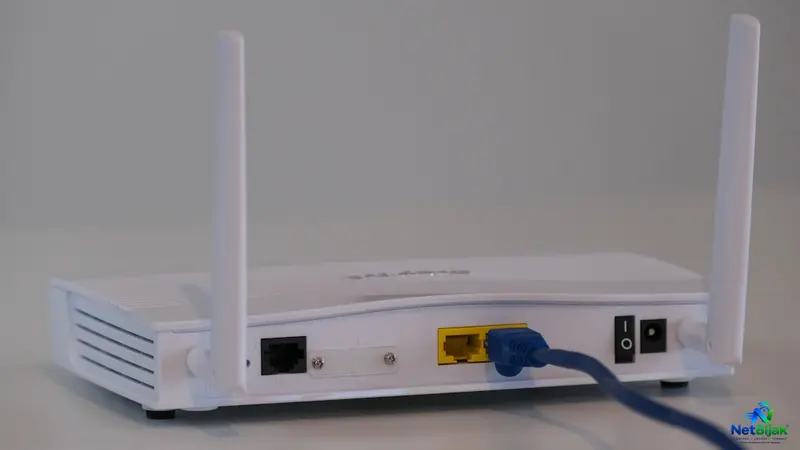
TP-Link has officially introduced Wi-Fi 8 technology in Malaysia, focusing on the upcoming IEEE 802.11bn standard. Unlike previous generations that prioritized peak speeds, Wi-Fi 8 emphasizes reliability, congestion management, and coordination between multiple access points. Products like the Archer 8 Ultra and Deco 8 Ultra are now entering the market, even though the underlying technical standards are still being finalized. For most Malaysian households, the decision to upgrade depends on whether they are currently experiencing network interference rather than just needing faster speeds. Since many local providers already supply capable Wi-Fi 7 hardware with 1Gbps and 2Gbps plans, users should carefully evaluate their existing bottlenecks before investing. Ultimately, the performance of your network remains limited by your oldest client device and the physical setup of your home.
TP-Link has introduced Wi-Fi 8 in Malaysia, but the important part is not the headline speed.
At its APAC B2B Summit in Kuala Lumpur on 15 September 2026, TP-Link introduced Wi-Fi 8 locally and showcased the Archer 8 Ultra router and Deco 8 Ultra mesh system. The Edge Malaysia – TP-Link Wi-Fi 8 Malaysia launch
For Malaysian home users, the better question is:
What does Wi-Fi 8 actually improve, and is your current network already good enough?
Wi-Fi 8 Is Targeting a Different Problem
The IEEE project behind Wi-Fi 8 is P802.11bn – Enhancements for Ultra High Reliability. Its work includes areas such as multi-AP coordination, coordinated spatial reuse and interference mitigation. IEEE 802.11bn project timeline
That makes Wi-Fi 8 less about simply pushing the peak speed number higher and more about keeping wireless performance consistent when the network gets crowded or complicated.
TP-Link says its Wi-Fi 8 implementation is designed to address congestion, interference and coverage consistency through its StabilityEngine. TP-Link – Wi-Fi 8 announcement
For a home with several phones, laptops, TVs, cameras and smart-home devices, that is a more meaningful problem than whether one laptop can achieve another theoretical speed record.
Wi-Fi 8 Is Still Being Standardised
There is an important caveat.
As of September 2026, IEEE P802.11bn is still under development. The current IEEE timeline lists the project at D2.0, with further standards work still to be completed. IEEE 802.11 timeline
The IEEE Working Group also reported on 3 September 2026 that the D2.0 initial ballot had passed and the task group was moving into comment resolution. IEEE 802.11 Working Group update
TP-Link's first Wi-Fi 8 products are therefore arriving while the underlying IEEE amendment is still being finalised. TP-Link describes the Archer 8 Ultra and Deco 8 Ultra as being based on the upcoming IEEE 802.11bn standard. TP-Link – Wi-Fi 8 announcement
That matters when deciding whether to be an early adopter.
What TP-Link Is Bringing to the Market
The two main consumer products are the Archer 8 Ultra and Deco 8 Ultra.
| Product | Type | Aggregate wireless rating | Wired connectivity |
| Archer 8 Ultra BN19000 | Tri-band router | Up to 19Gbps | Up to 10Gbps |
| Deco 8 Ultra BN22000 | Tri-band mesh | Up to 22Gbps | Up to 10Gbps |
TP-Link rates the Archer 8 Ultra at up to 19Gbps aggregate wireless speed and the Deco 8 Ultra at up to 22Gbps, with both platforms supporting up to 10Gbps wired connectivity. TP-Link – Archer 8 Ultra and Deco 8 Ultra
Those figures describe the platform's combined wireless capacity. They do not mean a single phone on a 2Gbps fibre plan will download at 19Gbps or 22Gbps. Actual client performance depends on the client device and the rest of the network.
Where Wi-Fi 8 Could Actually Help
Crowded Wi-Fi
The 802.11bn project includes multi-AP coordination and coordinated spatial reuse, which are intended to improve how multiple access points share wireless resources. IEEE 802.11bn project details
This becomes more relevant in a larger home using several mesh nodes than in a small flat with one access point.
Interference
The project also includes interference mitigation. IEEE 802.11bn project details
TP-Link positions its Wi-Fi 8 implementation around maintaining more consistent connectivity when interference and simultaneous device activity increase. TP-Link Wi-Fi 8 technology
Multi-AP Homes
This is probably the most interesting angle for users with large landed homes or multi-storey houses.
When several access points are operating in the same environment, coordination becomes more important. Multi-AP coordination is one of the areas being developed under 802.11bn. IEEE 802.11bn timeline
What Malaysian 1Gbps and 2Gbps Users Already Have
This changes the upgrade calculation.
A Malaysian user on a current high-speed fibre plan is not necessarily starting from an old Wi-Fi 5 router.
Unifi currently bundles a Wi-Fi 7 Combo Box with both its 1Gbps and 2Gbps Home plans. Unifi Home Fibre plans
Maxis currently states that its Wi-Fi 7 router is available to 1Gbps and 2Gbps Home Fibre customers; its FAQ says the router can deliver up to 1.8Gbps over Wi-Fi with a compatible Wi-Fi 7 client and up to 2Gbps over wired LAN. Maxis Home Fibre FAQ – Wi-Fi 7 router
TIME currently lists a Wi-Fi 7 router plus Wi-Fi 7 mesh with its 1Gbps Home Fibre plan, while its 2Gbps plan includes a high-performance Wi-Fi router. TIME Home Fibre plans
That means a Malaysian customer considering Wi-Fi 8 may already be upgrading from Wi-Fi 7 hardware supplied by the ISP, not an outdated router.
So What Does Wi-Fi 8 Add?
This is the practical distinction:
| Current setup | Reason to consider Wi-Fi 8 |
| 100–300Mbps, few devices | Little reason based on speed alone |
| 500Mbps–1Gbps, normal household use | Check whether current Wi-Fi is actually limiting you |
| 1–2Gbps, many active devices | More relevant if congestion or inconsistent Wi-Fi is already a problem |
| Large home with multiple mesh nodes | More interesting because multi-AP coordination is part of the Wi-Fi 8 direction |
| Current ISP-supplied Wi-Fi 7 works well | Weak reason to upgrade immediately |
This is not a ranking of Wi-Fi generations.
It is a question of whether the technology addresses an actual bottleneck.
The 2Gbps Test Is Simple
A 2Gbps broadband plan does not automatically require Wi-Fi 8.
Look at the complete path:
2Gbps fibre → ONT/BTU → router → Wi-Fi → client device
If the client is limited to Wi-Fi 6, the new router cannot turn it into a Wi-Fi 8 client.
If the indoor WAN connection is only 1GbE, that is another bottleneck.
If the problem is a dead zone upstairs, adding another access point may solve it more directly than replacing the main router.
The hardware generation matters, but the weakest part of the network still sets the practical ceiling.
Your Client Devices Matter
A Wi-Fi 8 router does not upgrade an existing phone, laptop or TV to Wi-Fi 8.
The client device retains its own wireless capabilities.
That is particularly important in Malaysia because ISP-supplied Wi-Fi 7 equipment is already being bundled with current high-speed plans from major providers. Unifi Fibre Broadband
Before buying a new router, check how many of your frequently used devices can actually take advantage of the newer standard.
What About Mesh?
Wi-Fi 8 becomes more interesting when the home has several access points.
The IEEE 802.11bn project includes multi-AP coordination as part of its technical work. IEEE 802.11bn project
TP-Link's Deco 8 Ultra is designed as a tri-band mesh system, and TP-Link rates a three-pack at up to 9,800 square feet of coverage and support for more than 200 connected devices. TP-Link Deco 8 Ultra details
Those are manufacturer figures, not guarantees for a Malaysian terrace house, condominium or semi-detached property. Actual coverage still depends on the building and node placement.
Malaysia Launch vs Local Retail Availability
TP-Link has already introduced Wi-Fi 8 in Malaysia, but the launch event and broad retail availability are not necessarily the same thing.
The Kuala Lumpur event took place on 15 September 2026. The Edge Malaysia – TP-Link Wi-Fi 8 launch
TP-Link's global announcement says regional pre-orders were scheduled to begin from 30 September 2026, with availability varying by market. TP-Link – Wi-Fi 8 availability
So Malaysian buyers should check local pricing, stock and warranty arrangements before treating the global launch schedule as the Malaysian retail date.
What to Check Before Buying
| Check | Why it matters |
| Current router | You may already have Wi-Fi 7 |
| Broadband speed | Determines how much Internet bandwidth is available |
| WAN/LAN ports | A 1GbE bottleneck can limit a faster broadband plan |
| Client devices | Determines which Wi-Fi features can actually be used |
| Coverage | A newer standard does not automatically fix poor AP placement |
| Congestion | One of the areas Wi-Fi 8 is designed to address |
| Number of APs | More relevant to Wi-Fi 8's multi-AP direction |
| Current problems | Upgrade only makes sense when it addresses an identifiable limitation |
For a Malaysian 1Gbps or 2Gbps household, check the ISP-supplied router first. Unifi and Maxis already provide Wi-Fi 7 hardware with their current high-speed plans, while TIME provides Wi-Fi 7 hardware with its 1Gbps plan. Unifi Home Fibre Maxis Home Fibre FAQ TIME Fibre Network
If that router already handles your household reliably, the jump to Wi-Fi 8 is mainly an early-adopter decision, not a requirement created by having a 1Gbps or 2Gbps plan.
NetBijak's Take
Wi-Fi 8 is more interesting as a reliability and coordination upgrade than as another speed-number upgrade. The underlying 802.11bn standard is still being developed, while Malaysian 1Gbps and 2Gbps users already have access to ISP-supplied Wi-Fi 7 hardware.
For most buyers, the right question is not “Is Wi-Fi 8 newer?”
It is:
“Does my current Wi-Fi have a congestion, interference or multi-AP problem that Wi-Fi 8 is actually designed to solve?”
Frequently Asked Questions
Yes. TP-Link introduced Wi-Fi 8 at its APAC B2B Summit in Kuala Lumpur on 15 September 2026 and showcased the Archer 8 Ultra and Deco 8 Ultra.
The IEEE P802.11bn project is focused on Ultra High Reliability and includes multi-AP coordination, coordinated spatial reuse and interference mitigation.
No. As of September 2026, P802.11bn remains under development and the IEEE timeline lists D2.0 as the current draft stage.
The Archer 8 Ultra is a tri-band Wi-Fi 8 router rated at up to 19Gbps aggregate wireless speed, while the Deco 8 Ultra is a tri-band mesh system rated at up to 22Gbps. Both are listed with up to 10Gbps wired connectivity.
No. Those are aggregate platform ratings. Actual performance depends on the client device, wireless conditions and the rest of the network.
Yes, depending on the provider and plan. Unifi currently lists a Wi-Fi 7 Combo Box with its 1Gbps and 2Gbps plans, while Maxis lists Wi-Fi 7 routers for its 1Gbps and 2Gbps Home Fibre plans. TIME currently lists a Wi-Fi 7 router and Wi-Fi 7 mesh with its 1Gbps plan.
Not automatically. The useful reason to upgrade would be a specific problem such as congestion, interference or a demanding multi-AP setup, rather than the broadband speed alone.
Not automatically. Older client devices retain their existing Wi-Fi capabilities.
Potentially. Multi-AP coordination is one of the areas included in the 802.11bn project, making it particularly relevant to networks using multiple access points.
Not unless the existing hardware is actually limiting your network. For Malaysian users, checking the current ISP-supplied router first is especially important because Wi-Fi 7 hardware is already bundled with several 1Gbps and 2Gbps fibre offerings.
Related Articles
 Article
Two terrace houses next to each other, one occupied by parents and the other by relatives. Instead o...
 Article
A cheap smart plug or IP camera does not need access to your laptop, NAS or home printer. Putting le...
 Article
If your smart home has 50 or more connected devices, upgrading to 1Gbps is not automatically the sol...
 News
NewsMore than 5,000 people gathering inside one venue can expose a networking problem that a normal home...
 Article
If you already have 1Gbps or 2Gbps Fibre, WiFi 7 can help remove the wireless bottleneck — but upgra...
 Article
Why Does TikTok Make Netflix Freeze?If your Netflix stream freezes whenever the kids start scrolling...