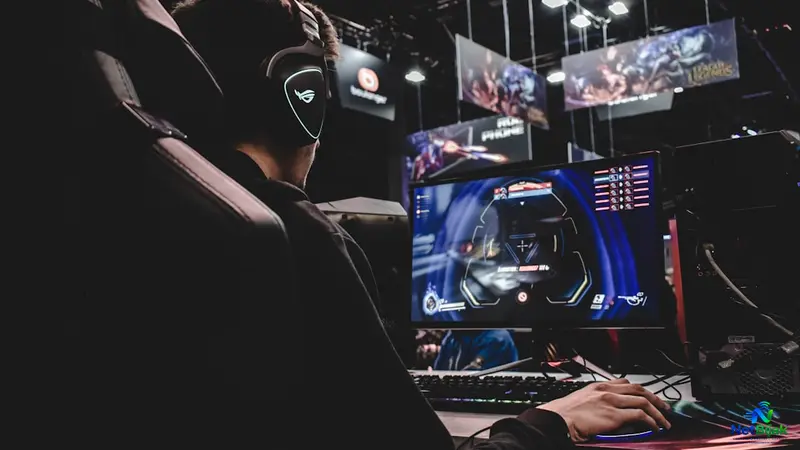
Best Broadband for Gaming in Malaysia: How to Choose the Right Internet Plan
For gamers in Malaysia, selecting the right broadband plan involves looking beyond high download speeds to prioritize low latency, stability, and minimal packet loss. Fibre broadband is generally the recommended connection type for competitive gaming, though performance can vary significantly based on your specific location and ISP routing. While 100Mbps is typically sufficient for most households, those who stream content or manage heavy simultaneous usage should consider higher speed tiers to ensure adequate upload capacity. Before assuming your ISP is the source of lag, it is essential to optimize your home network by using an Ethernet connection or improving your Wi-Fi setup. If fibre is unavailable, 5G home broadband serves as a viable alternative, though wireless signals can be less stable for competitive play. Ultimately, the best choice depends on checking service availability at your address and identifying a plan that meets your household's specific connectivity needs.
What Makes a Broadband Plan Good for Gaming?
For online gaming, having the fastest internet package does not automatically mean you will get the best gaming experience.
Gamers should pay attention to latency (ping), connection stability, packet loss, upload speed, and the quality of the home network.
Download speed is still important, especially if you regularly download large games, updates or game files. However, once your connection is fast enough for your household's needs, reducing latency and maintaining a stable connection can make a bigger difference during actual gameplay.
Malaysia's communications regulator, MCMC, includes latency and packet loss among the quality-of-experience factors for esports. Its technical definition for fixed broadband esports performance specifies latency below 50 ms for 90% of the time and packet loss below 0.5%.
1. Ping and Latency Matter More Than You Think
Ping, usually measured in milliseconds (ms), is the time it takes for data to travel between your device and the game server and back.
Lower latency generally means a more responsive connection.
This matters particularly in games where timing is critical, such as:
- Valorant
- Counter-Strike
- Mobile Legends
- PUBG
- Call of Duty
- EA Sports FC
- Dota 2
- League of Legends
For example, if you are playing a competitive shooter, a connection with consistently low latency can feel much more responsive than one that occasionally experiences large ping spikes.
However, you should not assume that a higher Mbps package automatically gives you lower ping. Speed and latency are related to network conditions, but they are not the same thing.
The route between your ISP and the game's server can also affect latency.
2. Fibre Broadband Is Usually the Better Starting Point for Serious Gamers
For a fixed home gaming setup, fibre broadband is generally the first type of connection worth considering.
Fibre provides a dedicated fixed-line connection into the home and can offer high speeds and consistent performance. Major Malaysian providers such as Unifi, Maxis, TIME and CelcomDigi offer fibre broadband plans, although availability varies by address.
Unifi, for example, specifically markets its fibre plans toward gaming and content-creation use cases and highlights the importance of stable, low-latency connectivity for gaming.
That does not mean every fibre provider will produce exactly the same ping for every gamer. Your location, routing, congestion and the particular game server you connect to can all make a difference.
The most important rule is therefore: check availability at your address before choosing a provider.
Unifi official fibre broadband information
3. How Much Speed Do You Actually Need for Gaming?
You may not need a 1Gbps connection just because you are a gamer.
For many households, 100Mbps can already be sufficient for online gaming, particularly if only one or two people are actively using the connection.
The required speed increases when several people are sharing the same connection.
For example:
| Household situationSuggested starting point | |
| 1–2 users, mainly gaming | 100Mbps |
| 2–4 users, gaming + streaming | 100–300Mbps |
| 4–6 users, gaming + 4K streaming + WFH | 300–500Mbps |
| Large household / heavy simultaneous usage | 500Mbps+ |
These are practical starting points rather than strict technical requirements.
The important question is not simply:
“How fast is the plan?”
but:
“How many people and devices will be using the connection at the same time?”
For example, Maxis currently describes its 100Mbps plan as suitable for lighter usage, while its 500Mbps plan is positioned for moderate-to-heavy users including online gaming and work-from-home setups.
4. Upload Speed Matters If You Stream Your Gameplay
If you only play games, download speed is usually more important than upload speed.
But if you also:
- Stream on Twitch or YouTube
- Upload gameplay videos
- Share large files
- Live stream in high resolution
- Create gaming content
then upload performance becomes much more important.
A plan with strong upload capacity can make streaming and uploading large video files considerably easier.
This is one reason gamers should compare the download and upload speeds of different broadband plans rather than looking only at the headline download number.
5. Wi-Fi Can Be the Real Cause of Your Lag
Before blaming your ISP, check your home network.
Even a good fibre connection can perform poorly if your gaming device is connected through congested or unstable Wi-Fi.
For competitive gaming, connecting your gaming PC or console directly to the router using Ethernet is usually preferable when practical.
If you have to use Wi-Fi:
- Place the router in a suitable central location.
- Avoid placing it inside cabinets or behind large obstructions.
- Use a modern Wi-Fi standard.
- Keep the router firmware updated.
- Consider a mesh system if coverage is poor.
- Avoid heavy downloads while playing competitive games.
Unifi also recommends Ethernet connections where possible and highlights router placement and network management as factors that can affect gaming and streaming performance.
6. What About 5G Home Broadband?
5G Home Broadband can be useful when fibre is unavailable or when you need a flexible home connection.
However, gamers should evaluate it differently from fibre.
Wireless performance can vary according to:
- Signal strength
- Indoor coverage
- Network congestion
- Distance from the cell site
- Network conditions at different times of day
If competitive gaming is your priority and fibre is available at your home, fibre is generally the safer starting point.
If fibre is unavailable, 5G Home Broadband can still be worth considering, especially for casual gaming.
7. So Which Broadband Provider Is Best for Gaming in Malaysia?
There is no single provider that is guaranteed to be the best for every gamer in Malaysia.
A better approach is to compare the plans that are actually available at your address.
You should consider:
For casual gamers
Look for:
- 100Mbps or above
- Stable fibre connection
- Reasonable monthly price
- Good Wi-Fi coverage
For competitive gamers
Prioritise:
- Consistent low latency
- Low packet loss
- Stable fibre connection
- Ethernet connectivity
- Good local and international routing
For gamers who also stream
Consider:
- Higher upload speed
- 300Mbps or above depending on household usage
- Reliable router/Wi-Fi
- Enough bandwidth for simultaneous gaming and streaming
For large households
Look at:
- 300Mbps–500Mbps or higher
- Number of connected devices
- Wi-Fi coverage
- Simultaneous streaming and gaming requirements
8. Check Broadband Availability Before You Apply
A plan can look perfect on paper but still be unavailable at your home.
This is particularly important for condominium and apartment residents because fibre availability can vary between buildings and even individual premises.
The major providers have their own availability-checking processes. For example, Unifi directs customers to check service availability before ordering, while Maxis provides a fibre coverage checker that uses location information to determine available plans.
This is why you should check availability and port availability before assuming that a particular plan can be installed.
9. How to Find the Right Gaming Broadband Plan
Instead of choosing a plan purely because it has the highest Mbps, start with your actual requirements.
Ask yourself:
- How many people use the connection?
- How many devices are connected?
- Do I play competitive games?
- Do I stream gameplay?
- Do other people stream Netflix or YouTube while I play?
- Do I work or study from home?
- Is fibre available at my address?
- What is my monthly budget?
If you are not sure which plan fits your needs, NetBijak's Find My Plan lets you compare broadband options based on factors such as home type, number of users/devices and monthly budget.
You can then compare available plans and choose the one that best matches your requirements.
Final Verdict: What Is the Best Broadband for Gaming?
For most serious home gamers in Malaysia, a stable fibre connection is the best place to start.
But don't choose a broadband plan based on download speed alone.
The better formula is:
Low latency + stable connection + low packet loss + suitable speed + good home network
A 100Mbps fibre connection with stable latency can provide a better gaming experience than a much faster connection suffering from Wi-Fi problems or unstable latency.
If you are choosing between several providers, first check which services are available at your address, then compare speed, upload performance, contract terms, price and your household's actual usage.
Not sure which broadband plan is right for your gaming setup? Use NetBijak's Find My Plan to compare available broadband options based on your needs and budget.
Frequently Asked Questions
There is no single best provider for every gamer. Fibre broadband is generally the preferred option for serious home gaming because stability and latency are important. The best plan depends on your address, game servers, household usage and budget.
Yes. For many gamers, 100Mbps is enough for online gaming. You may need a faster plan if several people are using the connection simultaneously for streaming, downloads, video calls or other bandwidth-heavy activities.
Not necessarily in terms of ping. A 300Mbps plan gives you more bandwidth, which is useful for multiple users and simultaneous activities, but higher download speed alone does not guarantee lower latency.
Fibre is generally the better starting point for serious home gaming because it provides a fixed connection and consistent performance. 5G can be a useful alternative where fibre is unavailable.
Yes. Wireless interference, distance from the router and network congestion can increase latency or cause instability. For competitive gaming, Ethernet is generally preferable when possible.
A better router can improve local network performance, particularly when multiple devices are using the connection. However, a gaming router cannot magically fix poor ISP routing or high latency to a distant game server.
Consider your household size, number of devices, gaming habits, streaming requirements, budget and fibre availability. You can use NetBijak's Find My Plan to compare plans based on your requirements.
Related Articles
 Article
A single 4K TV does not automatically require a 100Mbps broadband plan.The more useful number is the...
 Article
Which Fibre Gives the Lowest Mobile Legends Ping?Based on available 2026 third-party testing in Kual...
 Article
Watching Netflix in 4K sounds like something that requires a very fast broadband connection.You migh...
 Article
If Unifi’s Maya chatbot keeps showing you options without addressing your actual problem, try anothe...
 Article
A 24-month broadband contract does not automatically mean the monthly price can never change.At the ...
 Article
A road contractor accidentally cuts an underground fibre cable. Suddenly, hundreds or thousands of U...